
From Stalled to Sought-After: How Borghese Rebuilt Its China Growth, From Ecommerce to AI Search
Last updated: October 2026
12 min read · By the YASO team.
In February 2026: how Borghese rebuilt its China ecommerce growth in under six months
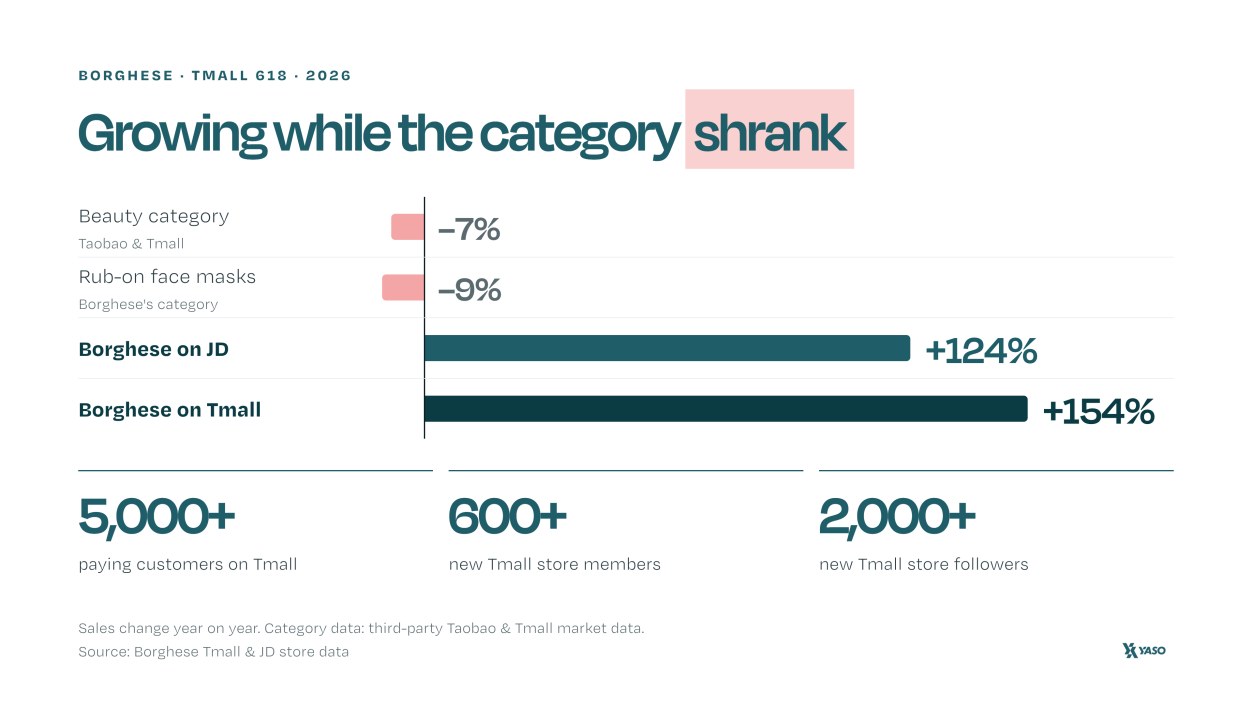
In February 2026, Borghese's China ecommerce stores were relaunching almost from scratch. Four months later, during 618, China's biggest mid-year shopping festival, the Italian spa skincare house grew its Tmall sales by 154% year on year. Over the same period, beauty sales across Taobao and Tmall fell around 7%, and rub-on face masks, Borghese's own category, fell around 9%. This is the story of how that happened, and what it shows about selling beauty in China today.
The problem: a busy store, but few buyers
Borghese has been making skincare in Rome since 1957. Its Fango mud masks have a loyal following from New York to Milan. When we began working with Borghese in China in February 2026, the brand had plenty of heritage and recognition. What it lacked was a voice in the places Chinese shoppers now make their decisions.
The early numbers made the problem clear. Visitors to Borghese's Tmall store had more than doubled on the year before, so shoppers were actively looking for the brand. Far fewer of them were buying. Sales for the month were running below the previous February, and more than 85% of revenue came from a single product, the green Fango mud mask.
The cause: missing from the research step
In China, a famous name is not enough. Chinese beauty shoppers rarely buy on reputation alone. Before they spend, most of them search RedNote (Xiaohongshu), a lifestyle app that works as a mix of Instagram, Pinterest and a review site. They read what real people say about texture, results and value. Then they buy on a marketplace such as Tmall or JD.
When we looked at Borghese on RedNote, most of the top content was more than two years old. Shoppers arriving at the store had no recent, credible reason to buy. Our first job was to rebuild that conversation.
Approach one: tell the story Chinese shoppers need
We did not change Borghese's logo, packaging or products. We changed the emphasis.
In Western markets, mud masks are usually sold on deep cleansing. In China, that territory is crowded and price-driven. So we started from a skincare concern that is very common in China. Many shoppers have combination skin: an oily T-zone (forehead and nose) prone to blackheads, and a drier, more sensitive U-zone (cheeks and jawline).
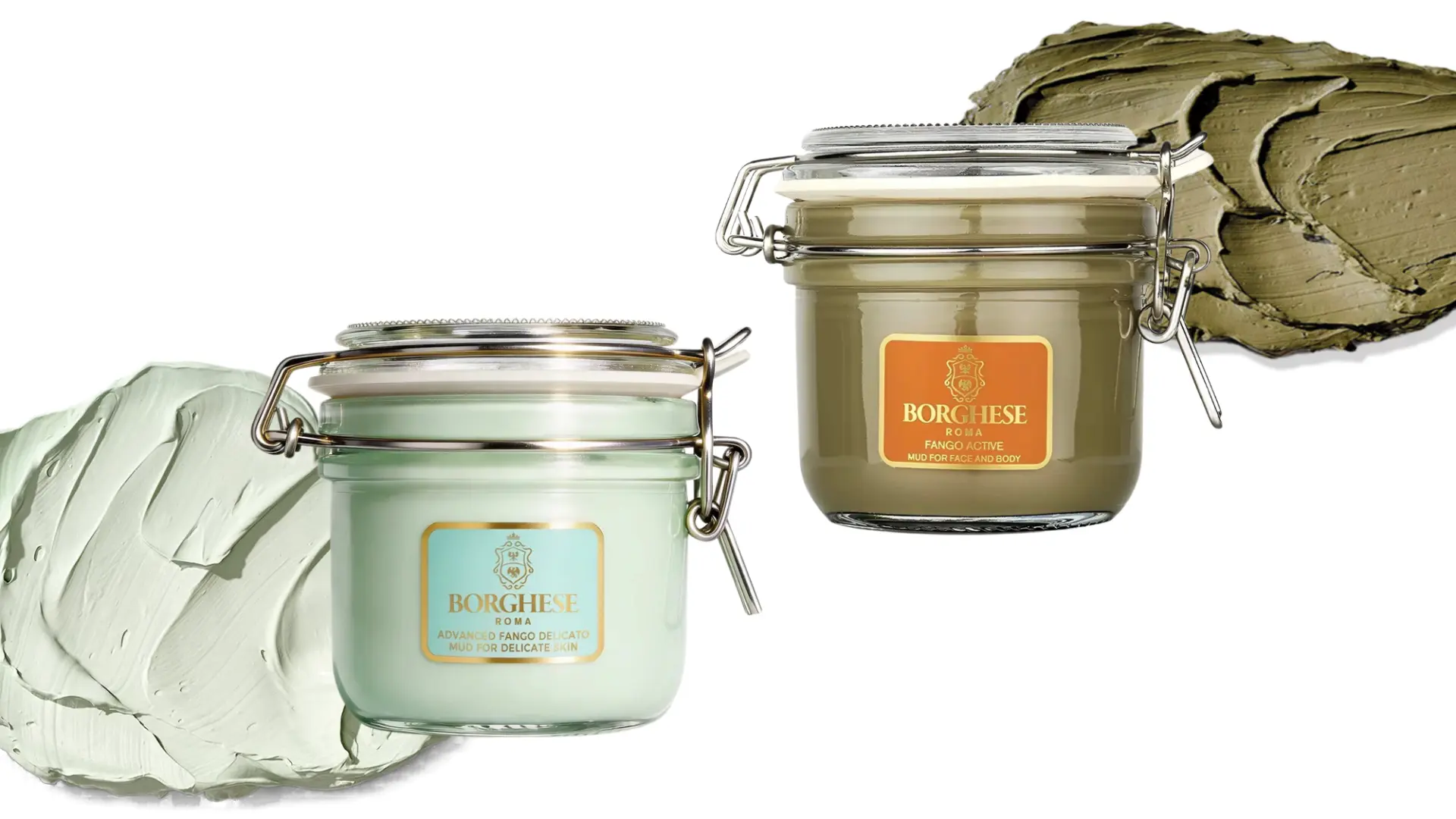
We turned the two masks into a "zone care" routine. The green mud treats the T-zone, controlling oil and clearing blackheads. The white mud gently cares for the U-zone. Used together, they become an at-home Italian spa ritual.
Each product has a clear role:
- Green mud: the best-known Borghese product in China, so it stays the lead product that brings new shoppers into the store.
- White mud: gentler, so it suits dry and sensitive skin and reaches more shoppers. It is also higher priced, which lifts order value. Leading shoppers from the green mud to the white also reduces the brand's reliance on a single hero product.
For orders that came through our ads, average order value rose by around 40% between May and July.
Throughout, we kept to one rule: claims only where there was evidence. Efficacy messages were limited to the green mud, which has clinical test data behind it. Every paid post also went through RedNote's official advertising declaration process.
Approach two: let shoppers choose the content
We ran the RedNote programme in three stages. Each stage had to prove itself before the next one received budget.
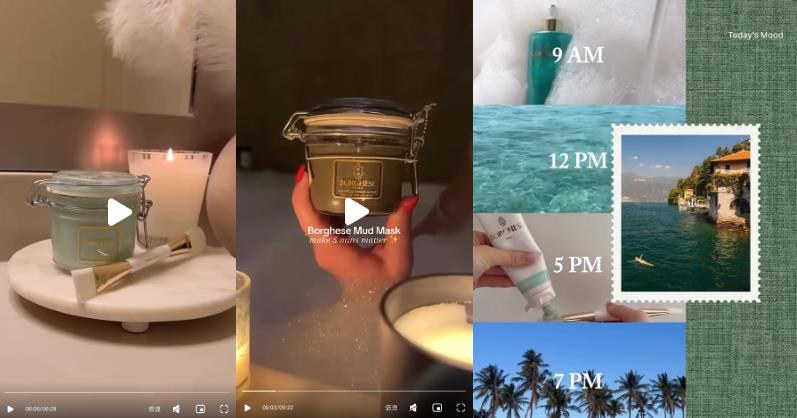
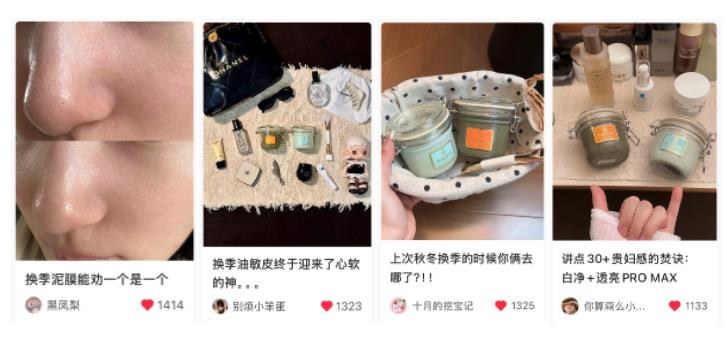
Seed. We invited around 450 everyday users to try the masks and post honest reviews. In China, these are known as KOCs (key opinion consumers): ordinary shoppers with some influence among their peers. Their posts averaged around 110 engagements each, above the industry average of around 100.
Test. We put a small boost budget behind the posts and watched which ones earned attention. The results were clear:
- The best performers felt real. They showed real skin texture, step-by-step "follow-along" blackhead tutorials that viewers copy as they watch, and practical seasonal skincare advice.
- The worst performers were polished, posed images that looked like adverts.
Authentic content earned three to five times the return of the polished ads.
Scale. Only content that passed the test received paid support. We ran conversion ads on RedNote that took shoppers straight to Borghese's Tmall store, so we could track every sale back to its source.
We targeted shoppers already researching mud masks, grouped by skin type and lifestyle, rather than buying broad reach. Return on ad spend climbed steadily from 1.55 in May and has held above 2 since July.
Most brands entering China pay for content before they know what works. Borghese only paid to scale what shoppers had already responded to.
Amplify: making the most of a celebrity moment
In May, actress Zhang Li posted a video on RedNote using Borghese's mud mask to clear blackheads. It was not a paid partnership. The post earned 13.7 million impressions and more than 460,000 engagements. She recommended the brand again in July, taking total impressions across both posts past 10 million.
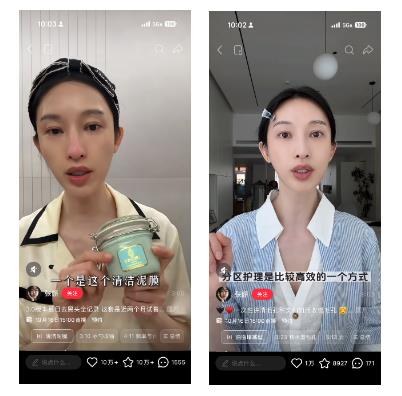
In China, a spike like that fades within days unless someone builds on it. We did three things to keep the momentum going:
- 1.Follow-along content. KOCs and everyday users quickly posted their own versions of her routine. This content went on to become some of our best-returning ad material.
- 2.Targeting. After her post, we added her fan audience to our ad targeting.
- 3.Douyin livestreaming. The buzz spread to Douyin (China's TikTok). After her post, more and more Douyin livestream sellers approached the brand themselves. Livestream partners grew from 10 in May to 19 in June, and livestream sales rose around 150%.

The results: growth that outlasted the festival
618 in 2026 was a hard festival for beauty, but Borghese grew against the market:
- Tmall sales rose 154% year on year, and JD sales more than doubled.
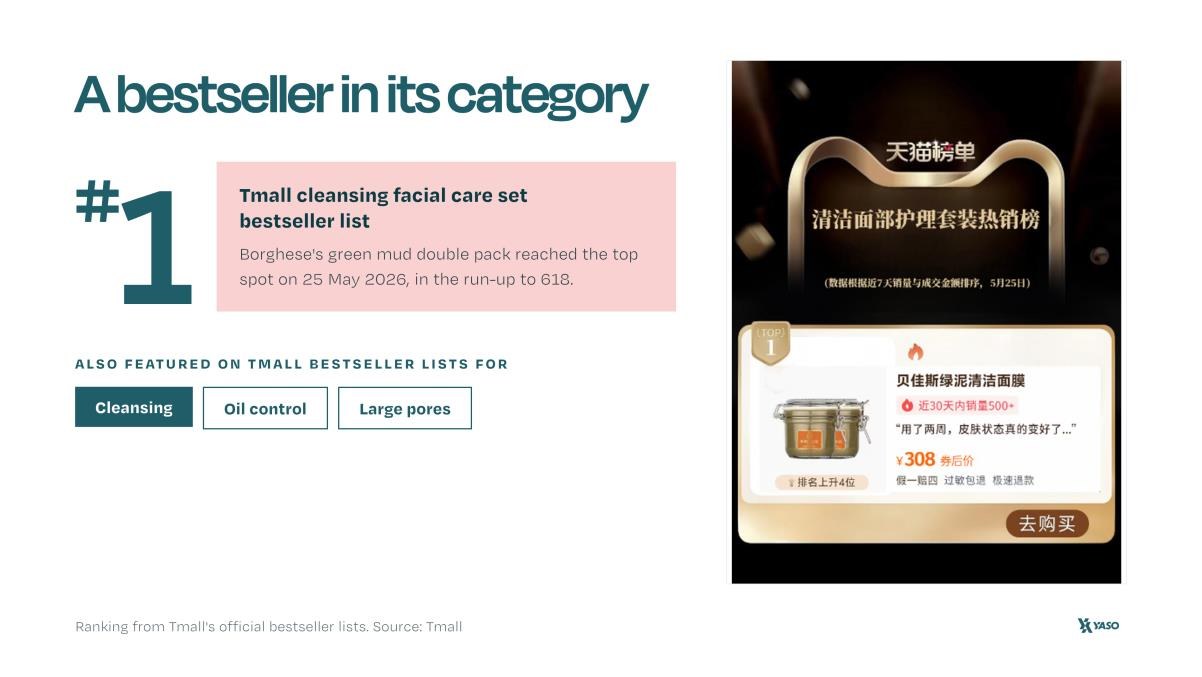
- The green mud double pack reached #1 on Tmall's cleansing skincare set bestseller list.
Many brands see sales drop sharply in July after a festival peak. Borghese did not:
- Tmall sales were up 320% year on year in July.
- Sales across all channels reached 125% of the monthly target.
- Borghese's Tmall store entered the platform's top 500 beauty stores for the first time, and climbed 30 places in the skincare sets ranking, to #110.
“We always knew Borghese had significant potential in China, but we needed to reignite consumer conversation and accelerate growth. YASO helped us take a more strategic approach to social commerce, using data to test what resonated with consumers on RedNote before scaling investment. This has given us greater confidence in how we invest, engage consumers, and unlock Borghese’s next phase of growth in China.”
What brands can take from Borghese's ecommerce story
Traffic is not the finish line. Borghese already had visitors. What it needed was a recent, credible reason to buy. If your China store is busy but conversion is weak, look at your RedNote presence before you look at your ad budget.
Seed before you sell. The demand that converted during 618 was built on RedNote weeks earlier. Brands that start content when the festival opens are already late.
Let shoppers choose your content. Test small, then put money behind what is already working. Authentic content can earn several times the return of polished ads.
Localise the story, not the logo. Borghese's Italian heritage did not change. The way it was told did, as a zone care routine and at-home spa ritual that Chinese shoppers actually needed.
Design for order value. When two products each have a clear role and a clear reason to be used together, shoppers are happy to buy both.
The next question: does China's AI recommend Borghese?
By the summer, Borghese was selling well on Tmall. But the way Chinese shoppers find products was already changing again. A growing number no longer start with a search bar or a scroll through RedNote. They ask an AI assistant, such as DeepSeek or Doubao, a question like "which mud mask is best for blackheads?", and the answer shapes what they buy.
More than 700 million people in China now use generative AI tools.1 If an assistant leaves your brand out of its answer, you can lose the sale before the shopper ever reaches your store. Strong Tmall sales do not change that, because AI assistants build their answers from different sources.
So we ran a one-week test with China GEO, YASO's AI search tool.
What we measured
China GEO checks how a brand appears across China's five leading AI assistants: DeepSeek, Doubao, Kimi, Qwen and Yuanbao. It asks five questions, each scored out of 20:
- Presence: does the brand appear?
- Ranking: where does it sit in the answer?
- Perception: how is it described?
- Persuasion: is it recommended?
- Consistency: is that true on every assistant?
Together, the five scores make an AI Search Score out of 100, ranked against competitors.
The diagnosis: known, but not chosen
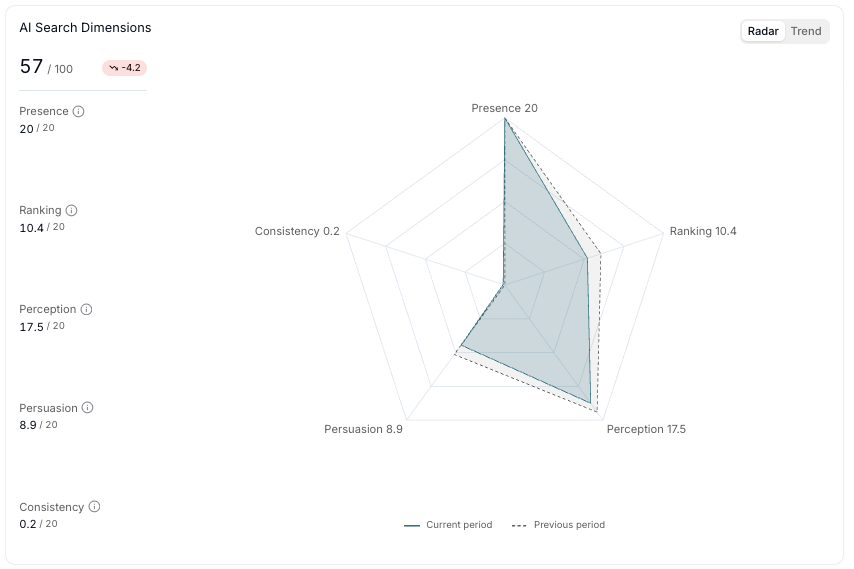
Before the test, Borghese scored 57 out of 100. It ranked #61 among all the brands AI mentioned in its tracked shopping searches. The breakdown showed why:
- Presence, 20/20. AI knew Borghese. Awareness was not the problem.
- Perception, 17.5/20. When AI described Borghese, it got the heritage and product story right.
- Ranking, 10.4/20. Borghese appeared, but further down the answer than its competitors.
- Persuasion, 8.9/20. AI mentioned Borghese but rarely recommended it.
- Consistency, 0.2/20. Borghese was visible on some assistants and close to invisible on others.
It was the same pattern we had seen on Tmall in February. Shoppers knew the brand, but too few chose it.
For AI Search, the cause was pinpointed in the sources. AI assistants build their answers from websites they trust. Three of them (DeepSeek, Qwen and Yuanbao) were drawing on two platforms where Borghese barely featured:
- Zhihu, China's leading question-and-answer site, often compared to Quora. Borghese was cited 28 times, against a competitor average of 248.
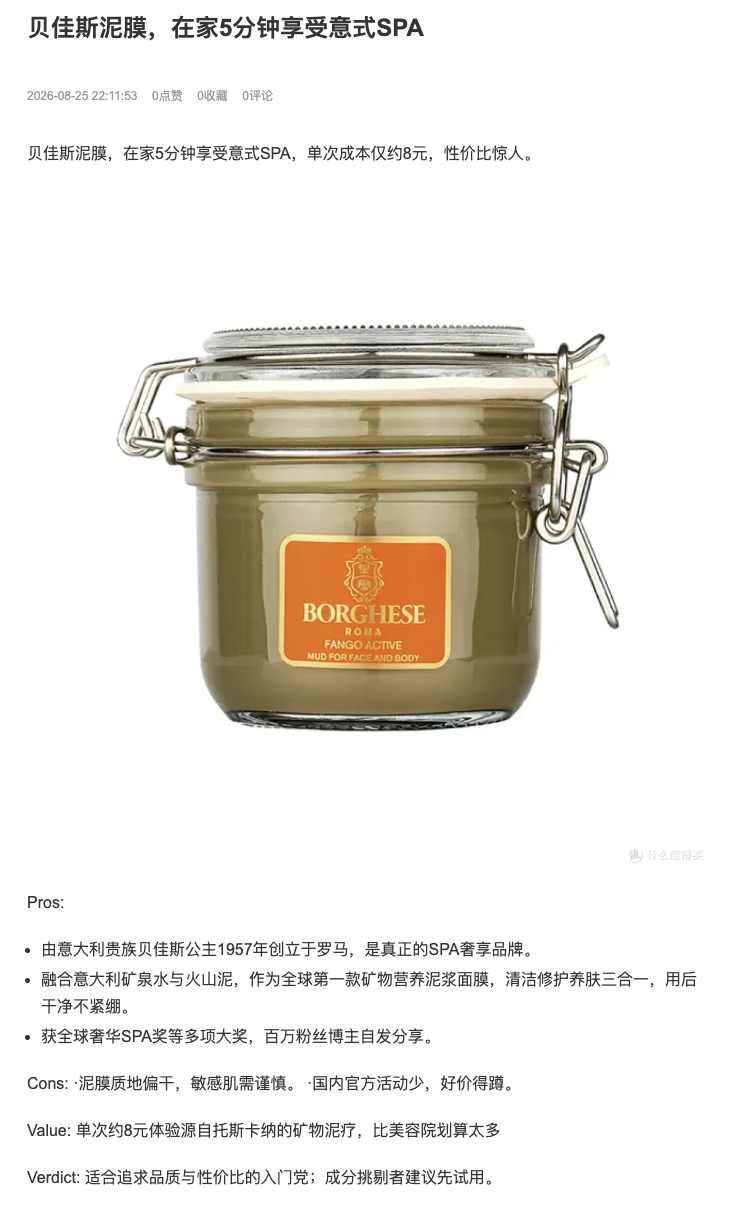
- SMZDM, a shopping community for deals, reviews and buying guides. Borghese was cited 24 times, against a competitor average of 146.
Borghese did not lack content. It lacked presence in the places AI was already looking.
Approach: publish where AI is already looking
For one working week, Monday to Friday, we followed China GEO's recommendations exactly.
- 1.Choose the targets. China GEO ranked every action by likely impact. We chose Zhihu and SMZDM because brands can publish there straight away.
- 2.Brief from what already works. For each platform, the tool wrote a brief modelled on the competitor content AI was already citing. For SMZDM, that meant a value-led review with a benefit-and-time headline, honest pros and cons, and a cost-per-use comparison with a salon treatment.
- 3.Draft fast, refine by hand. China GEO produced each first draft in around 10 minutes, in English or Mandarin. Our China-based specialists refined every piece for accuracy, tone and platform norms, and Borghese approved it before it went live.
The content carried the same at-home Italian spa story that was already working on RedNote.
The results: 29 places in one week
We measured again one week later, using the same search scenarios, the same five assistants and the same competitors.
- Ranking: Borghese rose from #61 to #32, and its AI Search Score from 57 to 61.2.
- Topics: ranking improved in three of the five shopping topics tracked for the brand: Buying Guide #16 to #7, Skin Concerns #36 to #15, Where to Buy #38 to #27.
- Sources: the Zhihu gap closed entirely, and the SMZDM gap fell by 93%.
- Citations: AI assistants cited Borghese 223 times from the two platforms, up from 52 (Zhihu 28 to 151, SMZDM 24 to 72).
- Assistants: visibility rose on all three target assistants: Qwen +79%, DeepSeek +48% and Yuanbao +16%. Kimi and Doubao, which were not targeted, moved by less than 4%.
- Share of voice: Borghese's share of all brand mentions rose 43%. It now appears in around one in six relevant AI answers.
“In China, the path to purchase is evolving as more consumers turn to AI assistants for product recommendations and discovery. Following our efforts to rebuild Borghese’s presence on RedNote and Tmall, YASO helped us explore how visible our brand is across China’s AI-powered discovery landscape. In just one week, GEO testing gave us a clearer picture of where Borghese stands today and the opportunities to strengthen our visibility, reach more consumers, and accelerate growth in this rapidly evolving market.”
What comes next: from cited to recommended
AI now finds and cites Borghese far more often. But brands in China are constantly creating and optimising their brand content across a vast ecosystem, and are leveraging AI-powered technology to decrease content-cycle time and effort.
That is why China GEO pairs our proprietary diagnostic methodology with actual content recommendations, helping global brands react at local speed. AI search will need ongoing tracking and optimisation rather than a one-off fix. Brands ready to adapt for the AI search will have a head start on gains that compound.
Sources:
¹ CNNIC, September 2026.
Borghese Tmall and JD store data
Category data from third-party Taobao and Tmall market data.
Sales changes are year on year.
Read the full case study pack
In China, a famous name is not enough.
In February 2026, Borghese's China ecommerce stores were relaunching almost from scratch. Shoppers were visiting the Tmall store in record numbers, but few of them were buying. The brand had heritage. What it lacked was a voice where Chinese shoppers now make their decisions.
This free 12-minute case study pack shows how YASO rebuilt that voice, and what happened when we asked the next question: does China's AI recommend the brand? It includes:
- —The content system behind a 154% sales increase at 618
- —The real campaign visuals and data from RedNote, Tmall and Douyin
- —A one-week AI search test across China's five leading AI assistants