
The China plan you wrote three years ago is already out of date
10 Min Read · By Effie Chen, Senior Business Development Lead, YASO

Five assumptions British and European brands still hold about China, what has replaced them, and the ten questions our webinar audience asked afterwards.
Key takeaways
- Cross-border e-commerce removes animal testing from the equation entirely, and can have you selling in roughly eight weeks.
- British heritage is now a ticket of entry rather than a reason to buy. Peer proof on social platforms is what converts.
- Discovery has moved to RedNote and Douyin. Tmall and JD are where you harvest demand, not where you create it.
- Build demand for three to six months before your storefront opens, then register only proven winners for general trade.
- The launch is rarely what damages a brand. Stock lead times and exit clauses are.
The paradox
If you read the headlines, China looks like a market to avoid. Retail growth has slowed. Beauty and cosmetics declined during this year's 618 festival. Domestic brands are undercutting imported ones on price because they sit next door to the factory.
Then you look at what is actually happening on the ground and the picture stops making sense. Western brands are still accumulating serious demand in China, some of them before they have even opened a store.
The paradox resolves once you accept a fairly uncomfortable idea: the appetite has not gone anywhere. The way Chinese consumers discover and buy brands has changed, and most of the China plans sitting in brand founders' drives were written for the old version.
Our Senior BD Lead, Effie Chen, spent an hour on this with Faye Speedie of Beauty Bulb recently. Effie leads business development at YASO and previously spent eight years in social commerce across EMEA and China, including running sales strategy and operations at TikTok.
Five assumptions worth retiring
1. "We can't enter China because we're cruelty free"
This is the single most common reason brands rule themselves out, and it is the one that has changed most.
If you enter through cross-border e-commerce, animal testing does not come into it. For general trade the position is more nuanced than either "required" or "abolished", and it depends on your category, your manufacturer and your compliance record. We set out where the line now sits in our guide to China's cosmetics animal testing rules in 2026.
2. "British heritage will sell the brand for us"
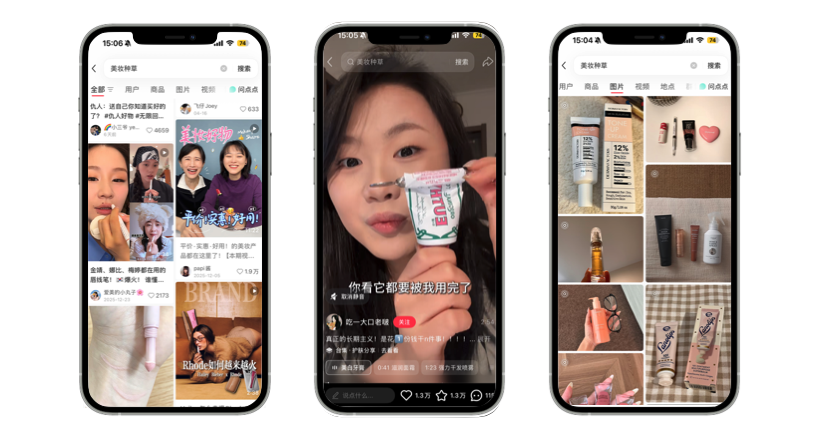
Provenance still helps, but it has become a ticket of entry rather than a reason to buy. Chinese consumers have access to every Western brand that matters, and they research before they purchase. What converts is peer proof: reviews, creator content and visible results from people who look like the buyer.
3. "We'll open a Tmall store and see what happens"
A storefront is a place to harvest demand, not a place to create it. Brands that open first and market later spend their launch budget buying traffic into an empty store. Build demand for three to six months on discovery platforms, then open.
4. "The platforms all do roughly the same job"
They do not. The meaningful split is not by category but by function.
| Platform | Closest Western equivalent | Role for your brand |
|---|---|---|
 RedNote (Xiaohongshu) RedNote (Xiaohongshu) | Instagram crossed with Reddit | Discovery, credibility, peer review |
 Douyin Douyin | TikTok, same parent company ByteDance | Discovery, livestream conversion |
 Tmall Tmall | Amazon | Repeat purchase, margin, longevity |
 JD.com JD.com | Amazon | Repeat purchase, logistics strength |
We go deeper on how the two halves work together in our guide to China social commerce for global beauty brands.
5. "The risk is the launch"
The launches are rarely what damages a brand. Three other things do.
What is possible, before what is desirable. Some ingredients simply will not clear Chinese customs, CBD being the obvious example. Establish that early, because no amount of demand-building rescues a product that cannot legally arrive.
Stock. Brands entering China for the first time consistently underestimate how quickly sales can ramp. Working for months to find a hero product, hitting a viral moment and then having no lead time to produce is worse than being overstocked, because pent-up demand is very hard to recreate a month later. Agree your lead times with your China partner before you need them.
The exit. The brands with the worst China stories are usually the ones who did not read the end of the contract. They leave a partnership to find stock being cleared at prices they never approved, stores closed, and in the worst cases a former partner manufacturing a replica of their own hero product.
Three questions to ask any prospective partner: Who owns the stock? Who controls the price floor? Who keeps the stores and brand assets when the relationship ends?
If your partner cannot answer those three cleanly, the answer is probably not one you want.
Ten questions brands asked
None of the three exactly, which is why the category confuses people.
The model YASO operates is closest to an extended China team: e-commerce operations, store setup and merchandising, pricing and promotions, supply chain and payments, content and creator partnerships, customer service, offline retail relationships, and reporting.
The important structural distinction is that we are not a distributor. We do not buy your stock. We work on a consignment model, taking a monthly or quarterly order and paying the brand monthly. That matters more than it sounds, because stock ownership determines who controls your pricing, and pricing determines whether your brand positioning survives.
Commercial models vary widely across the market, so the useful thing is to know which questions to ask rather than which number to expect.
Ours has three components:
- A revenue share on China net sales, calculated after tax, returns and cancellations, which covers the operational work rather than charging fees for it.
- A small monthly software fee for dashboard and AI discoverability tool access.
- A growth budget committed by the brand, which funds marketing activity directly, with no management fee or retainer taken out of it.
What to probe with any partner: is the operational work charged as fees or aligned to sales, is the revenue share calculated on gross or net, and does your marketing budget get skimmed before it reaches the market.
There are two routes into China, and the difference between them shapes everything else.
| Cross-border e-commerce | General trade | |
|---|---|---|
| Time to market | Around 8 weeks | Considerably longer |
| SKU cap | None, though we rarely recommend more than 10 at launch | None, but each SKU registered individually |
| Packaging and labels | Unchanged | Changed to meet Chinese requirements |
| Cost | Lower | Higher, charged per SKU registered |
| Channel access | Certain online channels only | Unrestricted, online and offline |
Doing either alone from the UK is harder than it looks, largely because of language and the need for someone local to file. Cross-border is manageable. General trade is where most brands find they need help.
The sequencing point from part one applies here too: launch cross-border, learn what sells, then spend general trade registration money only on the products that have already proved themselves.
For cross-border, compliance comes down mainly to ingredients rather than paperwork. You are not changing labels or formulations unless you contain something highly restricted, CBD being the clearest example.
One practical addition that brands rarely think about: packaging durability. Bottles that shatter easily will cost you stock in transit within China. It is worth reviewing your packaging format for the logistics, not just for the shelf.
This one is recent and catches people out. Following a scandal involving Chinese-owned brands presenting themselves as foreign, platform regulation on health supplements tightened considerably.
Supplement brands now need a certificate of origin for each SKU they want to launch, including on cross-border channels. If you are bringing a supplement range into China, budget time for that documentation rather than assuming the standard eight-week cross-border timeline applies.
Less than you would expect. The meaningful split is not by category but by function.
Discovery platforms, RedNote and Douyin, are stronger for awareness, credibility and peer review. They are visual, they scale, and they are where new brands get found. The margin is thinner, because creators and livestreamers take commission.
Traditional platforms, Tmall and JD.com, have lost share but remain where repeat purchase, healthier margin and long-term business live.
The answer for almost every brand is both, in sequence: build demand where discovery happens, harvest it where the margin is.
It depends on positioning, and the tiers are fairly distinct.
- Premium: Sephora, SKP, and high-end department stores such as Kerry Centre in Shanghai.
- Mass and personal care: Watsons and Mannings. Faith in Nature, one of our brands, went into Mannings on that logic.
Trademark strategy needs a trademark lawyer, and we would rather say so than guess.
What we can say from experience is that timing is the part brands get wrong. We have had to walk away from a solid UK brand because someone had already squatted their name and logo in China. Squatters target brands that are visibly growing, and then charge for the return of their own identity.
Register as early as you can afford to, well before you launch.
Expect a period of not breaking even. For most brands the first six to twelve months is a growth phase, and the length depends on what you are optimising for.
Two reference points are useful here. Perfect Diary, during its rise, ran a marketing spend ratio above 50 per cent of revenue, effectively buying market share as fast as it could. L'Oreal, decades into the market, runs closer to 25 to 30 per cent across its portfolio. That range tells you roughly what competing at different ambitions costs.
If profitability matters more to you than share, there are levers: diversify platforms, diversify your SKU mix, measure each campaign against return rather than reach, and keep early activity sales-focused before spending heavily on brand building.
What matters most is agreeing with your partner, in advance, which of those two games you are playing.
Different in shape, not in difficulty.
In Europe, rising acquisition costs are pushing brands back towards omni-channel retail because pure e-commerce is hard to sustain profitably. That escape route is narrower in China, because digital penetration is so high. More than 80 per cent of Chinese consumers buy beauty products online, so online is not a channel choice, it is the market.
China's equivalent of rising CAC is creator and livestreamer economics. The large livestreamers take a significant commission and thin out your take-home.
The way through is to convert rented attention into owned assets:
- When a creator posts about your product, remake it in your brand's format and publish it on your own channels.
- When a livestreamer features you, capture high-quality footage and reuse it.
- Over time, move towards running your own livestream studio, where the margin is meaningfully better.
It is a two-to-three year build rather than a first-year fix, but the brands that skip it never stop paying rent on their own audience.
China's retail calendar

China's retail calendar has no Western equivalent, and planning against the wrong dates is an avoidable mistake.
| Festival | Date | Notes |
|---|---|---|
| Double 11 | 11 November | The largest. Invented by Alibaba's Taobao as a shopping occasion for single people. Now runs from late October to the end of November. |
| 618 | 18 June | The second largest, a summer sale created by the platforms. |
| International Women's Day | 8 March | A strong beauty moment. |
| Double 12 | 12 December | Closes the year. |
| Chinese New Year | Varies | Counter-intuitively quiet. A national holiday in the way Christmas is, which means people are not shopping. |
The uncomfortable conclusion
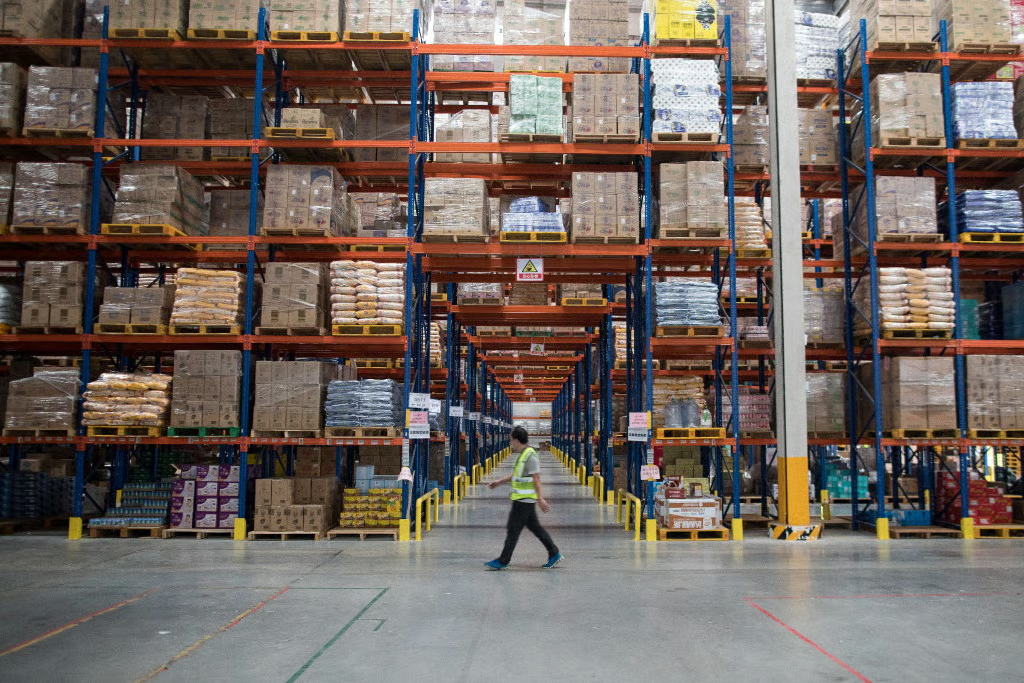
China is not a market you can run in house from the UK the way you can run Amazon in Germany. It is a different ecosystem, on platforms that have no Western equivalent, and it rewards patience before it rewards anyone.
But it is not closed, and it is not shrinking for brands who get the sequence right. During this year's 618, against a declining category, our client Borghese grew 154 per cent year on year on Tmall and 156 per cent on JD.
A declining market does not mean every brand declines. It means the rules for winning are changing.
So if your China strategy was written three years ago, the question may not be "Is China still right for us?" It might be:
Are we still operating from a China plan that reflects how Chinese consumers actually shop today?
That is a very different question.
About the author

Effie Chen is Senior Business Development Lead at YASO. She spent eight years in social commerce across EMEA and China, including running sales strategy and operations at TikTok. If you would like the webinar deck or a conversation about your own range, Effie is on LinkedIn.
With thanks to Beauty Bulb, and CEO Fay Speedie for hosting our original webinar session titled: Winning In China: A New Roadmap for Beauty Brands. Date: 19th August 2026. https://beautybulb.co.uk/
For the consumer evidence behind clean beauty positioning in China, read our China clean beauty market analysis.