Can You Trust a Livestreamer's "Guaranteed ROI"? YASO's Framework for Judging ROI Guarantees
8 Min Read · By Zoe He, Director of Ecommerce Operations, YASO
How brands running livestream commerce on Douyin, Taobao and Xiaohongshu can turn a promise into a system they can verify, negotiate and enforce.
Key takeaways
- The first step isn't asking the creator "can you guarantee it?" It's working out what is being guaranteed: sales (GMV) or ROI, and which costs go into the calculation.
- When a creator promises to "guarantee ROI", don't take it on trust. Look at how performance is measured, the product and promotional mechanics, the contract terms, and how the stream is run and reviewed.
- If the creator, product and livestream setup don't fit, even the biggest creators won't genuinely guarantee ROI.
- The contract must say what happens if the target is missed, and fees should be settled on actual performance.
- An ROI guarantee isn't a one-line promise. It's a whole system.
The question brands ask most
With Double 11 approaching, livestreams are once again where brands concentrate their budgets. And in China's livestream commerce, one question comes up more than any other:
When a creator says they can guarantee ROI, can you trust that promise?
"This isn't a question you can answer with a simple yes or no. It comes down to judgement built on industry experience."
Zoe He, Director of Ecommerce Operations, runs YASO's traditional ecommerce channels such as Tmall, and manages our creator livestream partnerships. In just over two years at YASO, she has helped international brands run over 50 marketing campaigns in China. Her experience: an ROI guarantee is worth negotiating, but never worth taking at face value.
Livestream commerce has no exact equivalent in Western markets. It depends on pacing, the host's delivery, real-time offers, the running order of products and how incoming traffic is converted. That's exactly why an "ROI guarantee" can so easily become a sales line rather than a deliverable result.
At YASO, we judge whether an ROI guarantee is credible by looking at four things.
1. Cross-check the data: does the creator's track record support the promise?
At YASO, we use our own data systems to cross-check a creator's historical account data against multiple industry sources, to judge whether their past performance can support a commitment of this size.
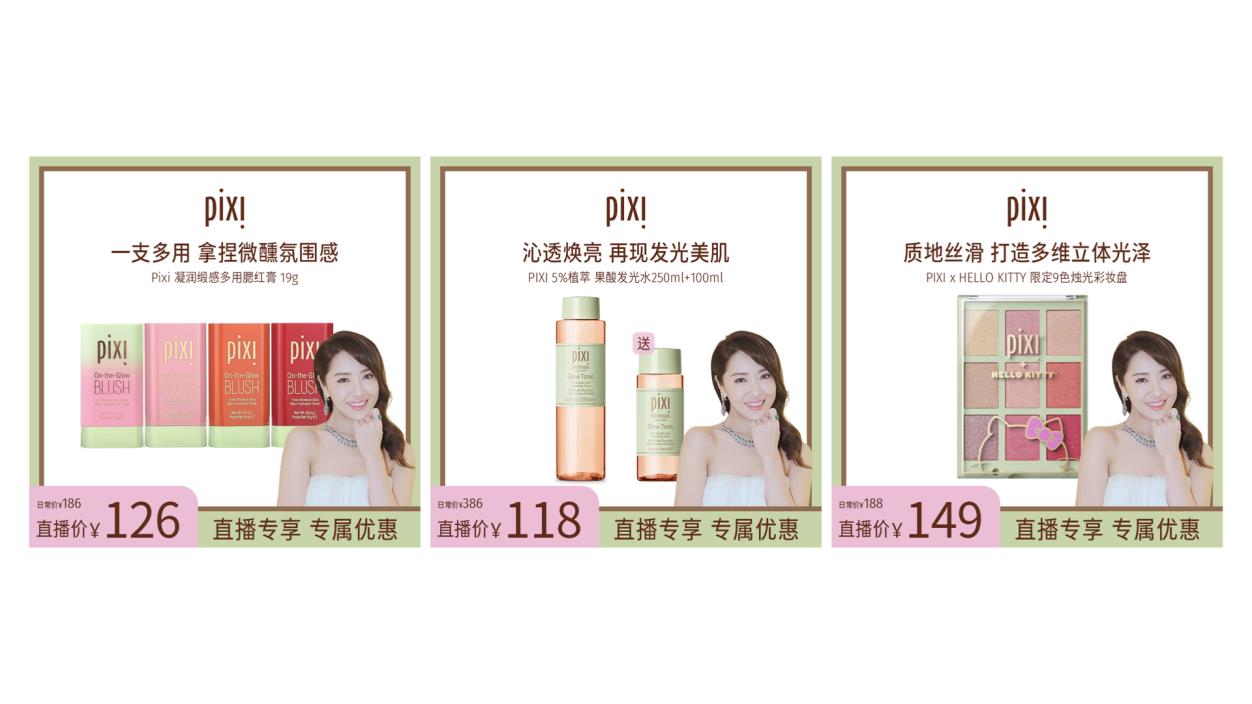
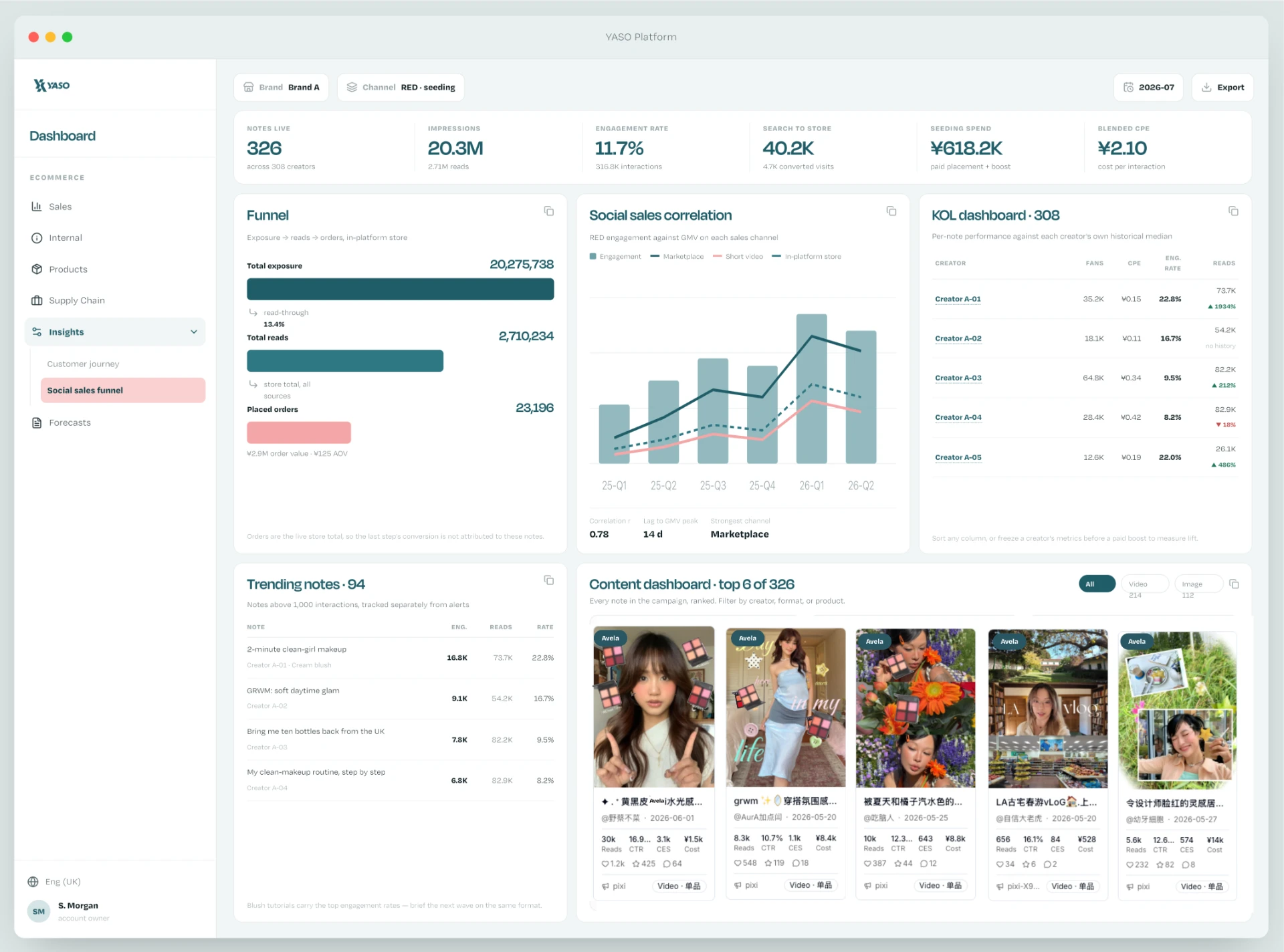
AI tools have made this step much faster. Take British skincare and colour cosmetics brand, Pixi: we use AI to collect creator data at scale and track competitors. We enter the target audience for Pixi's blush and our ideal creator profile into the tool, and it ranks creators by priority and recommends the best fits. Our business development team then approaches the most suitable creators directly, based on that shortlist.
We look beyond follower counts and average GMV per stream, focusing on the creator's sales record in the same category:
- GMV and number of livestreams in the same category;
- Return rate and average order value;
- Audience mix: whether the creator's buyers overlap with the brand's target customers;
- Net ROI once every cost is included: the placement fee (a fixed fee the creator charges per stream, paid regardless of sales), commission, paid traffic, samples and service fees.
A guarantee is only worth discussing if the historical data supports it. Otherwise, "guaranteed ROI" is just a numbers game.
2. Reputation and product mechanics: ROI is never the creator's alone to guarantee
Once we have a shortlist of potential livestream partners, it’s essential to ask around the industry before engaging in negotiations: have other brands worked with this creator, and what is their reputation?
Then we check whether the product and offer fit. Does the creator's audience overlap with the brand's target customers? Is the price within what their audience will pay? Are the gifts with purchase, exclusive deals, stock depth and listing schedule in place?
Every decision inside a livestream directly affects sales conversion. The most important decision is livestream merchandising.
Livestream merchandising is more than simply deciding the running order of the stream itself. It is the overall architecture of the event, from selecting the product line-up, to running order, to allocation of resources around the stream's goals (GMV, concurrent viewers, conversion rate, average order value and so on). It covers which products go into the stream, each product's role, when it is listed and delisted, stock allocation, pricing mechanics, how long each product is presented, and the pace of moving between products.
The livestream merchandising design and process is a deliberate art, taking into account logistics, behavioral science and buyer instinct built from years of livestreaming experience.
Common product roles to consider in livestream merchandising should include:
- Traffic drivers: attractively priced to pull viewers into the stream and lift viewer numbers;
- Deal items: heavily discounted to keep viewers watching and create buying momentum;
- Hero products: the products the brand most wants to push in this stream;
- Margin products: the main source of profit;
- Decoy products: a price or feature comparison that makes the hero product look better value.
Other key merchandising practices include:
- Product walk-through: the host introduces and demonstrates each product in turn;
- Building demand: holding back stock while the host explains and engages viewers, so purchase intent builds;
- Releasing stock: opening up inventory or an offer at the key moment;
- Closing the sale: time-limited or limited-quantity messaging that prompts viewers to buy now.

At YASO, we share these responsibilities with the creator. And any good local partner should have the capability and understanding of livestream nuances to plan this on a brand’s behalf.
On merchandising, we advise the creator, for example on which products should be traffic drivers and which should be margin products. We plan the mechanics for releasing stock and closing the sale together. During the stream, creators sometimes add extra incentives on the spot, and we are closely involved then too. None of this is fixed: practice varies by brand, and by the business development and operations team, at every stage.
If the brand doesn't provide enough to drive conversion, even top creators cannot genuinely guarantee results. We look at creator, product and setting separately: the creator brings traffic and trust, the brand brings the product and offer, and the operations team manages pacing and conversion. If any one of these elements is missing, the ROI can't be guaranteed.
"Negotiation doesn't end when you put a creator in front of the camera. We work with the creator's team on how to hit the guaranteed volume, including changing the product selection when needed."
3. Write the guarantee into the contract, including how it's measured
It may seem like basic business, but it’s worth stating: a verbal promise means nothing. It has to be in the contract. The terms should answer:
- Is the guarantee for GMV or for ROI?
- Which costs make up the ROI denominator: the placement fee, commission, paid traffic, or total spend?
- Do returns and refunds count? We usually calculate after returns are deducted, with orders counted according to the platform's final settlement date.
- How long is the measurement period? It depends on the contract: it could be a month, a quarter or six months.
- Who pays for paid traffic?
- Whose dashboard is the source of truth?
- What happens if the target is missed: a make-up stream, a refund, extra volume, extended payment terms, or a change of products and mechanics? We have used all of these.
Without these terms, an "ROI guarantee" is just a sales line. Genuinely professional partners aren't afraid of defining the terms in detail. It's vague terms that expose brands to unsatisfactory outcomes.
The biggest risk to watch: fake data and placement fees
As in many other markets, inflated GMV figures from creators in China are not uncommon. The bigger danger is using fake data to win a guaranteed-volume deal: the creator takes the upfront placement fee, then never refunds it, or refunds it very late. In the worst cases, the only recourse is legal action, and sometimes the money can't be recovered at all.
It’s one of many reasons why a brand’s China partner needs to be experienced and well-connected in the industry, in order to differentiate between the livestreamers who are able to produce results, from those bluffing. More often than not, brands must simply trust and rely on negotiators in order to facilitate livestream contracts and delivery This is why the right parter, with demonstrated livestream experience and capability is essential to any China partnership.
4. Execution and review: signing the contract is only the start
What this means in practice for brands:
- Before the stream: hold a product selection meeting; agree the script, offer mechanics and paid traffic plan; confirm customer service and stock.
- During the stream: monitor in real time, adjusting the listing order, stock, offers and messaging as traffic and conversion change.
- After the stream: settle against the agreed terms; review the creator, products, mechanics and team coordination; and build reusable lists of creators to work with again and creators to avoid.
How the fee is calculated: pay on actual performance
The core principle: the fee a brand pays is always calculated from the GMV actually achieved, working back from the agreed ROI.
An illustrative example (not real campaign data):
| Agreed | Actual | |
|---|---|---|
| Target GMV | RMB 400,000 | RMB 300,000 achieved |
| Agreed ROI | 2 | 2 |
| Fee payable | 400,000 ÷ 2 = RMB 200,000 | 300,000 ÷ 2 = RMB 150,000 |
In other words, if the target isn't met, the fee is recalculated on actual performance rather than paying the original RMB 200,000. The contract should also set out the guarantee period: how long the creator has to make up any shortfall, and how a proportional refund will be calculated if the target still isn't met.
"This is what an ROI guarantee looks like in practice. It isn't a promise the creator makes alone. It depends on four things: data, industry reputation, negotiation and the contract. You need all four."
ROI guarantee due diligence checklist
| Area | What to check | Good sign | Warning sign |
|---|---|---|---|
| Data | Past results in the same category, price range and offer type | Account data can be cross-checked | Only average GMV per stream, with no category, return or audience data |
| Reputation | Feedback from other brands | Consistent feedback from several peers | No previous partners, very mixed feedback, or disputes over placement fee refunds |
| Product and offer | Audience profile, price range, gifts, exclusive deals, stock | Creator, product and setting fit; competitive offer | The brand gives all the discounts while the creator just takes the placement fee |
| Contract terms | GMV or ROI, denominator, returns, period, paid traffic, remedies | Clear terms, settled on actual performance | The guarantee is only verbal |
| Execution and review | Before, during and after the stream | Monitoring, adjustments and a review | Nothing happens after the stream; no data kept |
Case study: Pixi × Kang Jie, all four steps in practice
In 2026, YASO worked with Pixi to secure a livestream with popular beauty KOL Kang Jie.
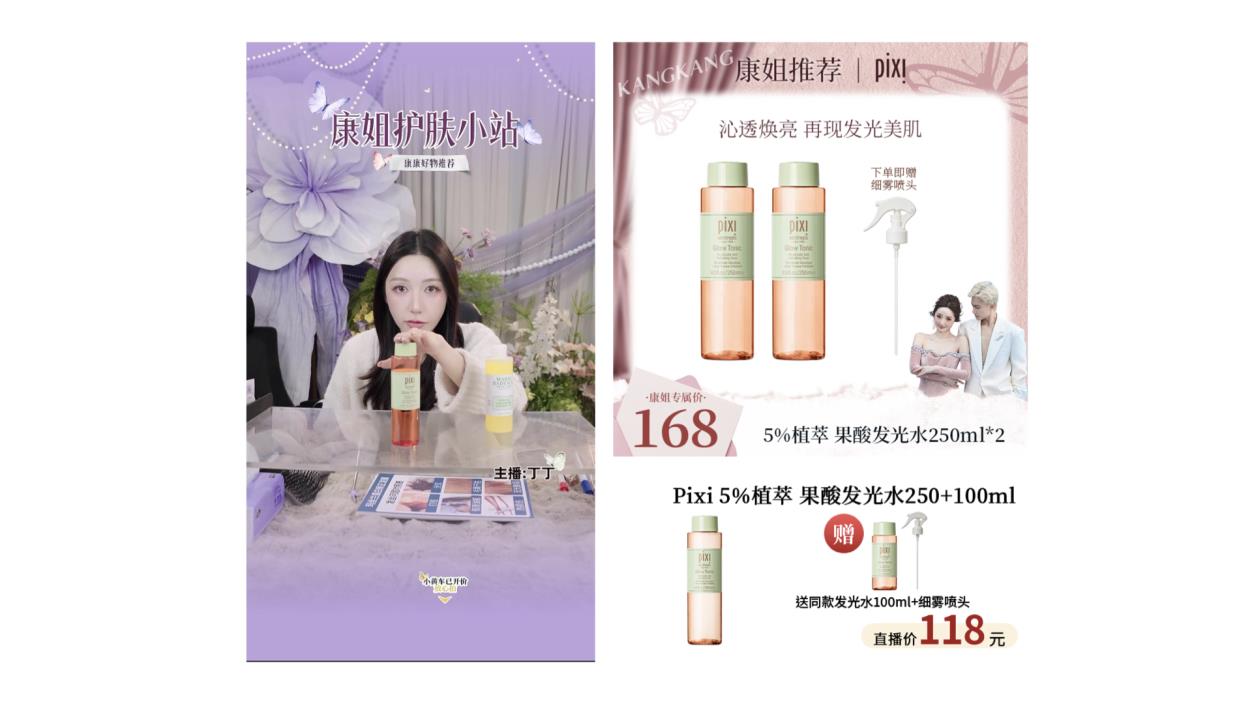
Data. Using our internal data systems, we reviewed Kang Jie's historical performance in beauty and colour cosmetics. Her results were consistent, and she was an established top-tier creator who streams regularly on Douyin.
Reputation. We asked around the industry, and the feedback was positive.
Negotiation and adjustment. The partnership started with blush, but the first stream's results were disappointing. Instead of pushing on regardless, we reviewed the stream with her team, reopened the conversation, switched the product to a glycolic acid toner and renegotiated the terms.
Contract. The contract set out the guarantee period, the deadline for making up any shortfall, and how a proportional refund would work if the target still wasn't met.
The result: after the changes, a Pixi livestream with Kang Jie generated more than RMB 70,000 in 10 minutes, with 1.4 million views.
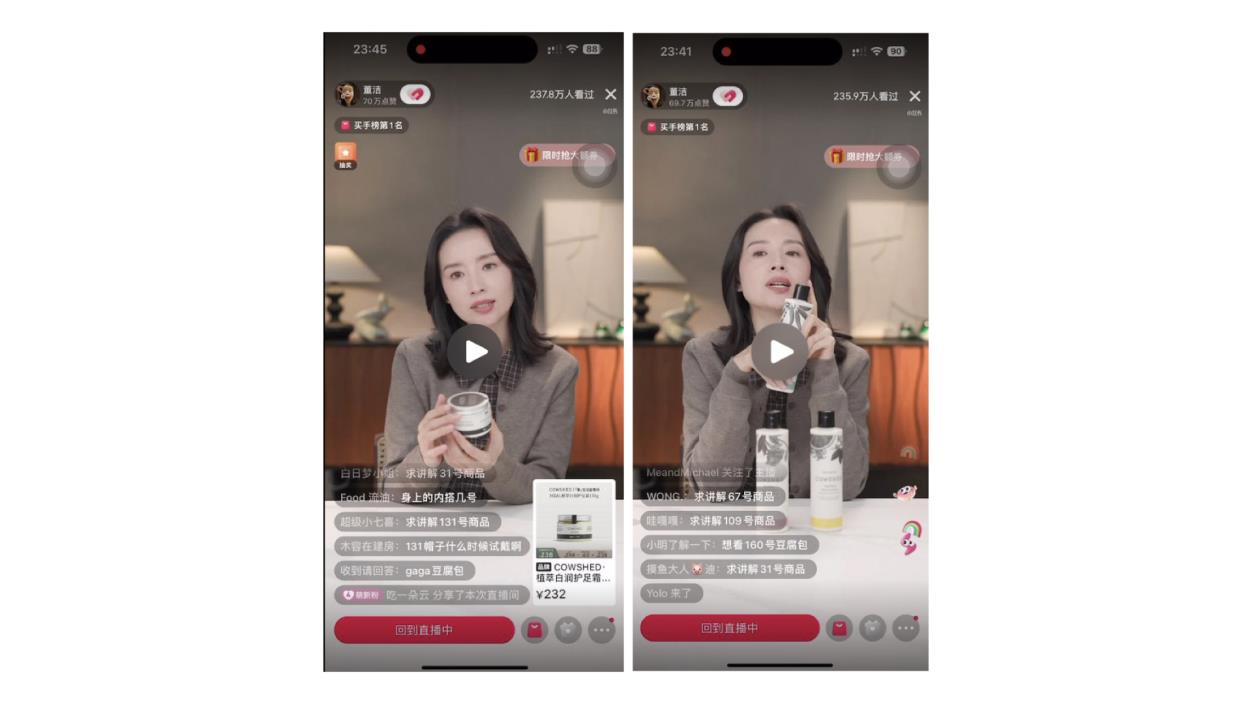
Another example is Cowshed. Starting from zero in China, the brand passed RMB 100,000 within five minutes of a single livestream with celebrity Dong Jie. Notably, that partnership had no volume guarantee. A guarantee isn't what makes a good result; the fit between creator, product and setting is.
Neither result came from the promise of guaranteed ROI alone. Both came from data, product mechanics, execution and timely reviews.
Of course, not every partnership goes to plan. Plenty of creators overcommit on guaranteed volume and miss the target. When that happens, partners must be prepared to negotiate with them: a make-up stream with a different product, different mechanics or extra incentives, or an extension of the partnership period.
For brands scaling up: from one livestream to a creator portfolio
The bigger the brand, the less livestreaming is about betting on one big creator, and the more it's about managing several creators at once, sometimes alongside the brand's own livestream channel. A few things matter here:
- Different products, different mechanics. When working with several creators at once, give each a different product and offer combination, so shoppers can't compare prices across livestreams.
- Brand livestreams depend on positioning. For brands focused on education, such as health supplements, their own livestreams tend to explain the science and build goodwill rather than sell directly. For a cosmetics brand like Pixi, the brand's own livestreams lean towards make-up tutorials, while creator livestreams drive sales.
- When the brand's own stream sells, keep discounts below the creators'. If the brand's own livestream also sells, its offers usually shouldn't be stronger than the creators'. Typically there are just one or two bigger deal items, with different products, packaging and offer combinations to prevent price comparison.
- Book early for big shopping festivals. During Double 11, placement fees are higher and larger volume guarantees can be negotiated, but competition makes scheduling difficult.
- Use data to tier creators. Settle and review every partnership on the same terms, and build lists of creators to work with again and creators to avoid.
For these brands, the value of an ROI guarantee isn't only in reducing the risk of a single stream. It's that every partnership leaves behind data that can be compared and reused.
Seven questions to ask a creator
- Are you guaranteeing GMV or ROI?
- Which costs make up the ROI denominator? Are placement fees, commission, paid traffic and service fees included?
- Are returns and refunds deducted? How long is the measurement period, and whose settlement date counts?
- Who pays for paid traffic? How are organic and paid traffic separated?
- Can you share historical data in the same category, including GMV, return rate, average order value and audience mix?
- If the target is missed, is there a make-up stream, a refund, extra volume, or a change of products and mechanics? Whose dashboard is the source of truth?
- Have any of your previous guaranteed-volume deals involved disputes over placement fee refunds?
Before you sign
When a creator promises to guarantee ROI, it's not that you can't trust it; it's that you can't just take their word for it alone. Get clear answers on how performance is measured, how returns are treated, who pays for traffic, what happens if the target is missed, and whose data counts. Then decide whether to go ahead.
An ROI guarantee cannot be delivered through a promise alone. It must be designed for and delivered through this whole framework working together.
About YASO
YASO is the China team for Western beauty, wellness and lifestyle brands, covering Tmall, JD.com, Xiaohongshu and Douyin. Our ecommerce expertise is underpinned by our proprietary, AI-powered platform consolidating your China business into a real-time, unified dashboard.